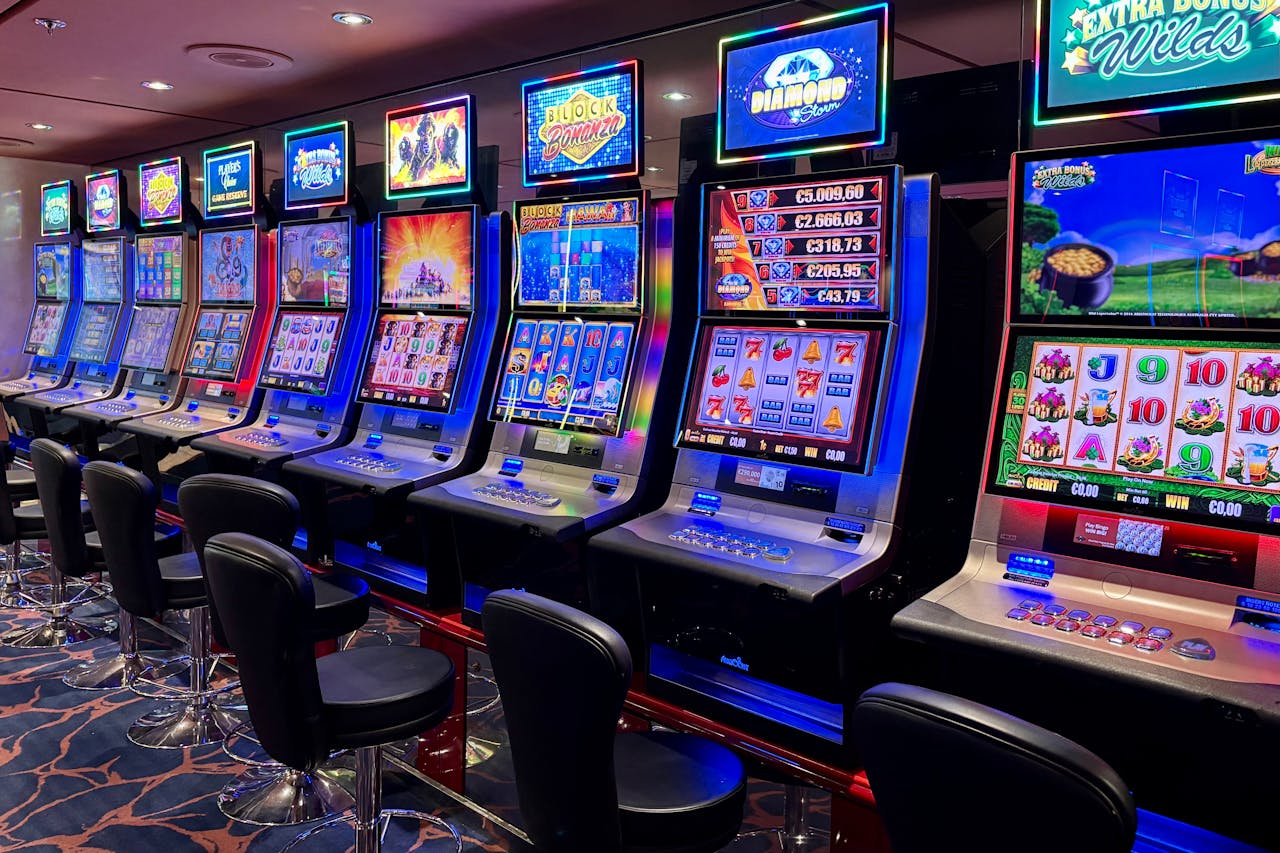
Slot machines have come a long way since their humble beginnings in the late 19th century. From the clunky, lever-pulled devices found Lucky555 in old saloons to sleek digital games accessible on smartphones, the slot machine has transformed in both form and function. This evolution reflects broader trends in technology, entertainment, and consumer behavior. In today’s world, slot machines are no longer just a fixture in casinos; they are part of a global, multi-billion-dollar online gaming industry. Understanding how these changes occurred provides insight into how gambling, and technology itself, continues to evolve.
The original slot machines, like Charles Fey’s 1895 Liberty Bell, operated with mechanical reels and physical levers. These early machines featured simple designs and limited combinations. Players would pull a lever to spin three reels and hope for matching symbols, often bells or fruit. Payouts were small, and the games were purely mechanical with no software or electronics involved. These early versions laid the groundwork for what would become one of the most popular forms of gambling worldwide. Despite their simplicity, they were revolutionary at the time and introduced the concept of random outcomes, which remains central to slot gameplay today.
In the mid-20th century, slot machines underwent a major transformation with the introduction of electromechanical components. Machines like Bally’s 1963 “Money Honey” allowed for more complex operations and larger payouts, which increased their appeal. This also marked the beginning of automated payouts and flashing lights, giving players a more engaging and entertaining experience. The integration of microprocessors in the 1980s further revolutionized the industry, allowing for the development of video slots. These video-based machines removed the need for physical reels entirely, replacing them with screens and digital simulations. With microchips came random number generators (RNGs), ensuring fair play while enabling more creative game mechanics and themes.
The biggest leap in slot machine evolution came with the rise of the internet and online gaming. Online slots emerged in the late 1990s and quickly became a staple in digital casinos. Unlike their physical counterparts, online slots are accessible 24/7, offer a greater variety of themes and features, and can be played from the comfort of one’s home or on the go via mobile devices. Game developers began to experiment with advanced graphics, animations, bonus rounds, and progressive jackpots that span multiple games and platforms. The online format also allowed for features like free spins, autoplay, and in-game achievements, making the experience more immersive and rewarding for players. Additionally, the rise of cryptocurrency and blockchain technology has begun to influence how online slots operate, providing more transparency and new payment options.
Today, slot machines are a high-tech blend of entertainment, gambling, and psychology. Developers invest heavily in sound design, visual storytelling, and mathematical models to create games that are both fun and profitable. They often use themes based on movies, mythology, fantasy, or pop culture to attract players. In regulated markets, both physical and online slots are subject to strict laws to ensure fairness and responsible gaming. Innovations like virtual reality (VR) and augmented reality (AR) are beginning to shape the next generation of slot experiences, offering players the chance to step into fully immersive game worlds. Whether in a Las Vegas casino or on a smartphone screen, slot machines continue to capture the attention of millions, proving that this classic game is anything but outdated.
 Site Title